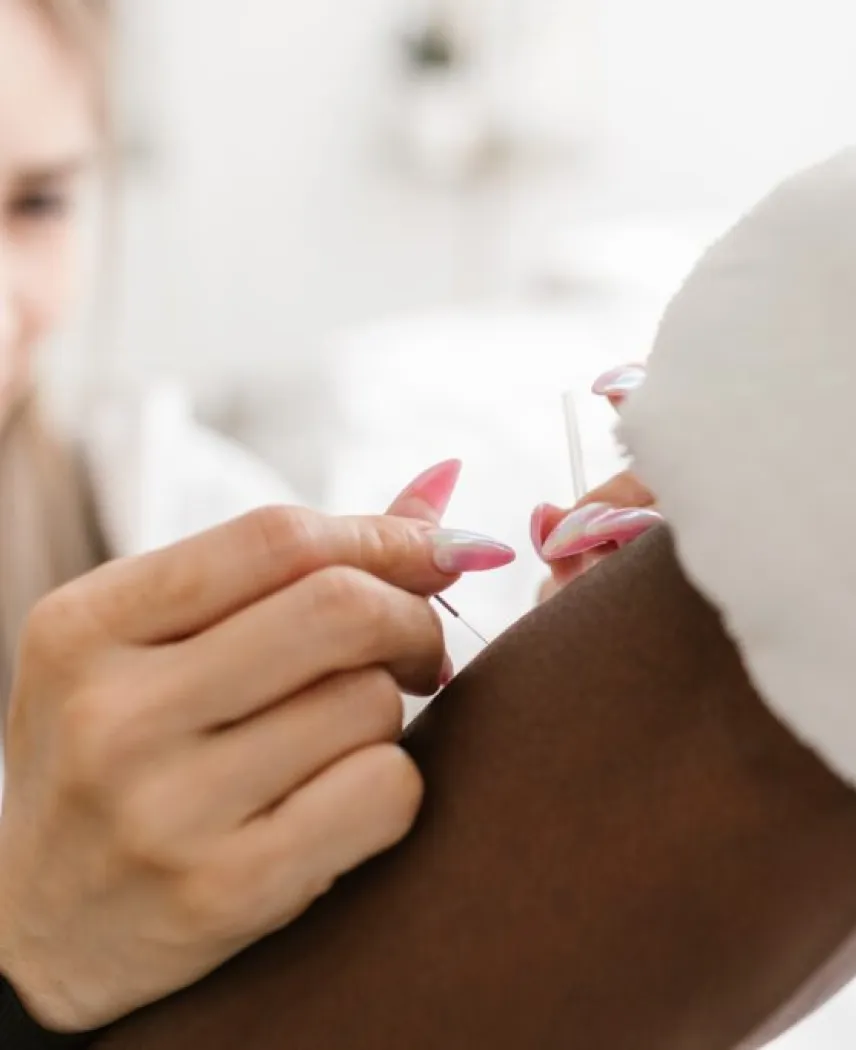
Dry needling uses very fine, single-use needles inserted into tight or painful muscle, often at trigger points. No medication is injected, which is why it is called “dry”.
It is used with exercise and other hands-on treatment to help reduce muscle pain and improve how easily the area moves.
How it differs from acupuncture
Dry needling is based on modern anatomy and aims at muscle and trigger points. Acupuncture comes from traditional Chinese medicine and uses different principles. Both use fine needles.
What it feels like
Most people feel little from the needle itself. You may feel a dull ache or a brief muscle twitch when the needle reaches a tight spot, which is expected. You may be sore for a day or so afterwards.
Where it is used
- Tight, sensitive muscle in the neck, shoulder and upper back
- Gluteal, hip and hamstring tightness
- Calf and forearm overload
- Muscle guarding that follows another injury
For athletes
Dry needling can be useful when tight muscle is limiting training. Because soreness is common afterwards, we plan it around your sessions rather than the day before a major effort.
What to expect at your first visit
The first appointment is 45 minutes. See what happens at your first visit.
- A conversation about what happened, what makes it better or worse, and what you want to get back to
- A hands-on examination of the painful area and the joints and muscles around it
- A clear explanation of what we find and what we recommend, including how long it may take
- Treatment at the first visit when it is appropriate, plus exercises to take home